free shipping on purchases over R500
If you are a new parent, you may have heard the term cradle cap, but perhaps you aren’t quite sure what it means. Cradle cap (or infantile seborrheic dermatitis) is a common inflammatory skin condition that affects many infants within the first three months after birth.
It’s characterised by scaly patches on their skin. While it may look alarming, rest assured that it’s not contagious, isn’t itchy or painful, and can be easily treated. In this blog, we’ll explore the causes, symptoms, and treatments of cradle cap, so you can better understand it and care for your little one.
What does cradle cap look like?
Cradle cap can look like white, yellow, or red patches of greasy, scaly, skin, or small, dry flakes like dandruff.
Where does cradle cap appear?
Although it usually appears on the scalp, cradle cap can also appear on a baby:
- face (nose, eyebrows, eyelids)
- ears
- neck
- armpits
- knees
- nappy area
If your baby gets cradle cap in their nappy area, it can help to keep the area as clean and dry as possible.
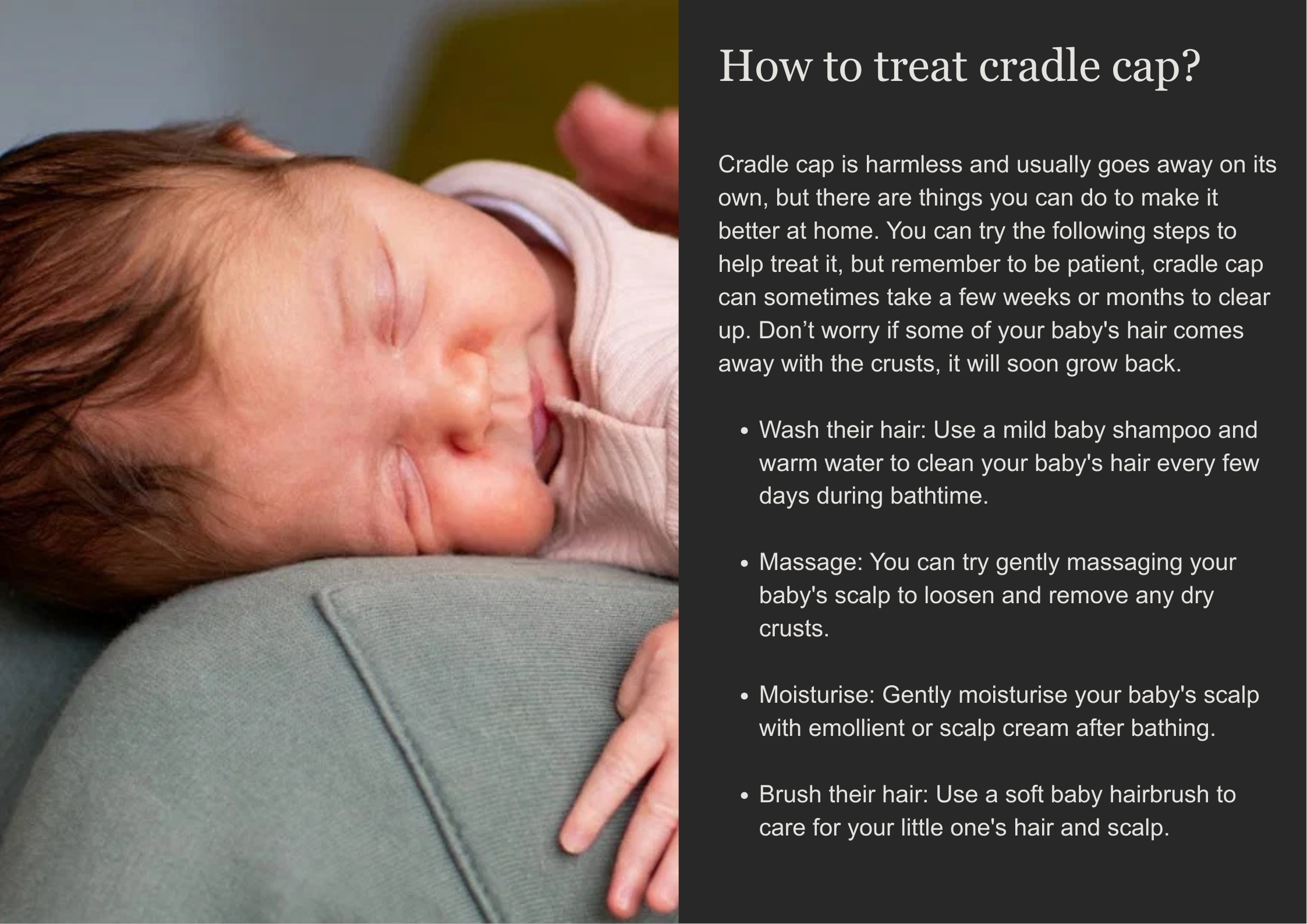
What not to do with cradle cap?
There are a few things that should be avoided when it comes to baby cradle cap, these include:
- Pick or scratch it. This can increase the chance of an infection developing.
- Applying olive or peanut oil. These may not be suitable for use on the skin and can pose an allergy risk.
- Using soap or adult shampoos.
How long does cradle cap last?
Cradle cap usually lasts for a few weeks to a few months, but it can vary from baby to baby. If you are concerned about your baby’s cradle cap or if it seems to be getting worse, it’s always best to seek advice from a healthcare professional.
When to see a doctor about cradle cap?
It’s important to note that while cradle cap is rarely cause for concern, as with any health or medical conditions, there does come a time when medical assistance might be needed.
You should seek medical assistance from your GP for your baby’s cradle cap if:
- their symptoms don’t clear up on their own after a few weeks
- your baby has cradle cap all over their body
- any areas look swollen, bleed or leak fluid
- the rash feels warm, smells or is itchy
If you notice any of these signs, it is best to consult with a healthcare professional as soon as possible. They will be able to determine the best course of action for your baby’s specific situation. If the cradle cap is inflamed or infected, they may prescribe a specialist steroid cream to help treat it.
How to prevent cradle cap?
The best ways to prevent cradle cap are regularly washing your baby’s hair with a specially designed baby shampoo, gently brushing their scalp, and making sure that all traces of shampoo, soap or cleansers are rinsed off your baby after bathtime.
No, the good news is that cradle cap isn’t contagious. It can’t be caught or passed on from one baby to another.
Cradle cap typically goes away on its own within a few weeks or months and usually resolves by four months of age. However, it’s always better to be safe than sorry when it comes to your baby’s health and trust your parenting instincts. If you have any concerns, it’s best to consult with a healthcare professional to determine the best course of action.
Yes, you can use a soft brush on your baby’s scalp to gently loosen flakes.
You can take measures to gradually treat cradle cap at home, but you should never pick or scratch it. When it comes to cradle cap, it’s best to be patient and remember that although it looks uncomfortable, it’s not likely to harm your baby.