free shipping on purchases over R500
- Change your baby’s nappy regularly to keep their skin healthy and prevent nappy rash.
- Always check nappies for wetness or soiling and replace them as soon as possible.
- Use a clean surface, wipes, and gentle products to keep your baby comfortable.
- A nappy bin can help contain smells and make frequent changes easier to manage.
Babies need frequent nappy changes, as often as 12 times a day (and sometimes more). It’s one of the most frequent tasks for new parents, and changing nappies correctly makes a big difference to your baby’s comfort and skin health.
Whether you’re a first-time parent or brushing up on skills, knowing how often to change a nappy, recognising when to size up, and keeping the process hygienic is key.
When to change a baby’s nappy
A wet or dirty nappy is the best time to change. You’ll also notice your baby might wee or poop after feeding, so you can get into a routine around your feeding times.
How often to change a newborn nappy
Newborns should be checked every two to three hours on average, but change immediately if wet or soiled to prevent discomfort and rash. Leaving a wet or dirty nappy on for too long can cause nappy rash and other conditions.
The number of changes needed will gradually reduce from around 12 a day to around six to eight as your baby gets older.
You’ll either be able to see or smell when your baby’s nappy needs to be changed. But as well as seeing or smelling wee or poo, keep an eye out for other tell-tale signs like sagging, dampness inside the nappy, the nappy feeling heavier than usual, or leaking.
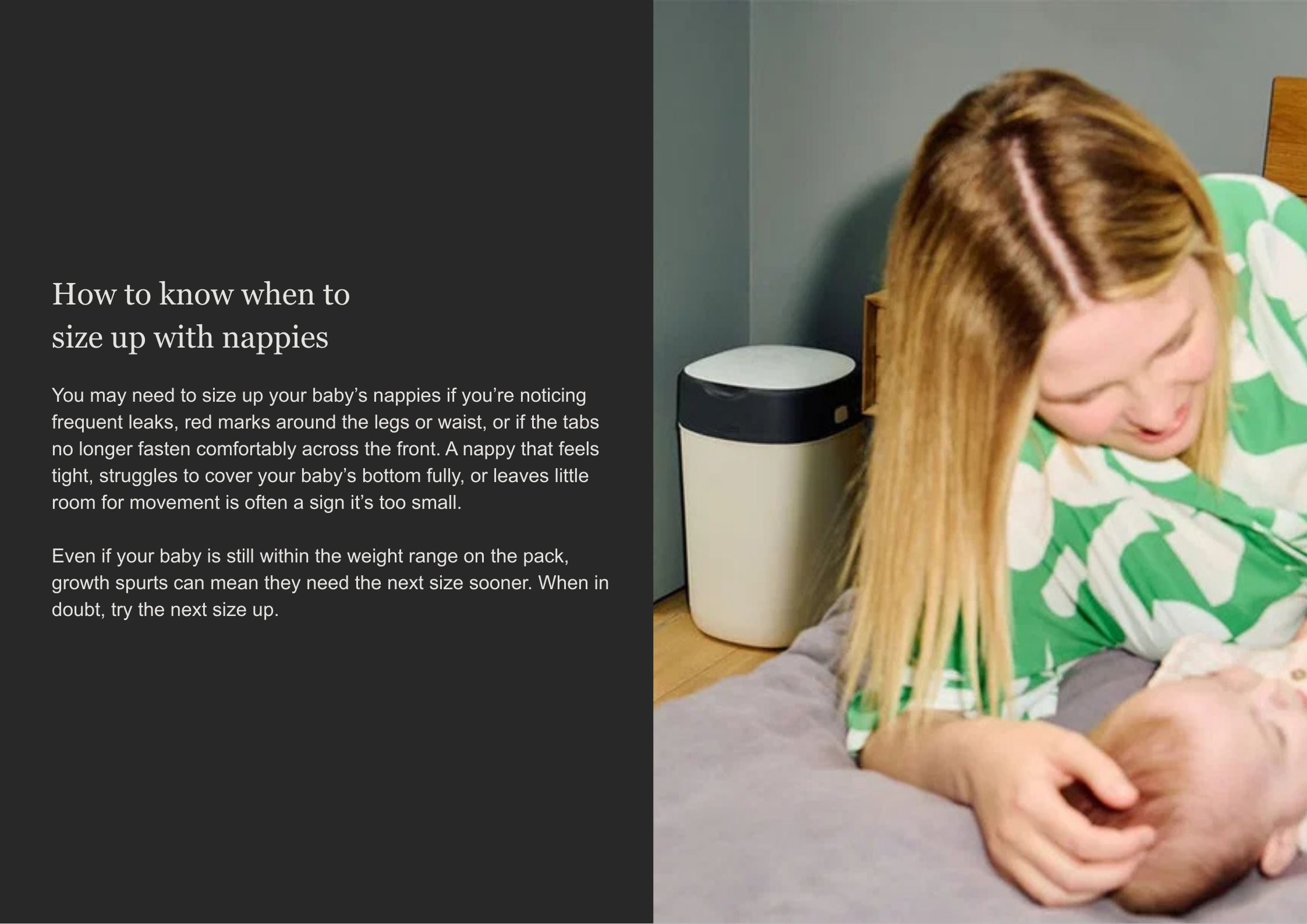
It’s also useful to know that leakage from the nappy may be a sign that it’s time to move up to the next nappy size.
What you need to change a nappy
Whether you’re at the changing station at home or reaching into your changing bag, you need the essentials, so you’ve got everything you need to hand to make the operation fast and effective.
Our nappy-changing essentials list:
- A good supply of clean nappies: Nappies come in different sizes, so don’t buy too many in small sizes as your baby will grow fast.
- A changing mat or towel: It’s handy to have a folding one for your change mat and something more comfortable at home.
- Wet wipes, reusable wipes, or cotton wool and warm water: You might want to start with warm water for your newborn and move to wipes at about two weeks old.
- Nappy cream: This isn’t essential, but you may choose to use a barrier cream for your baby’s delicate skin to help prevent nappy rash, which you can read about here.
- A spare set of clothes: Don’t get caught out with a messy situation, make sure you always have clean spare clothes nearby.
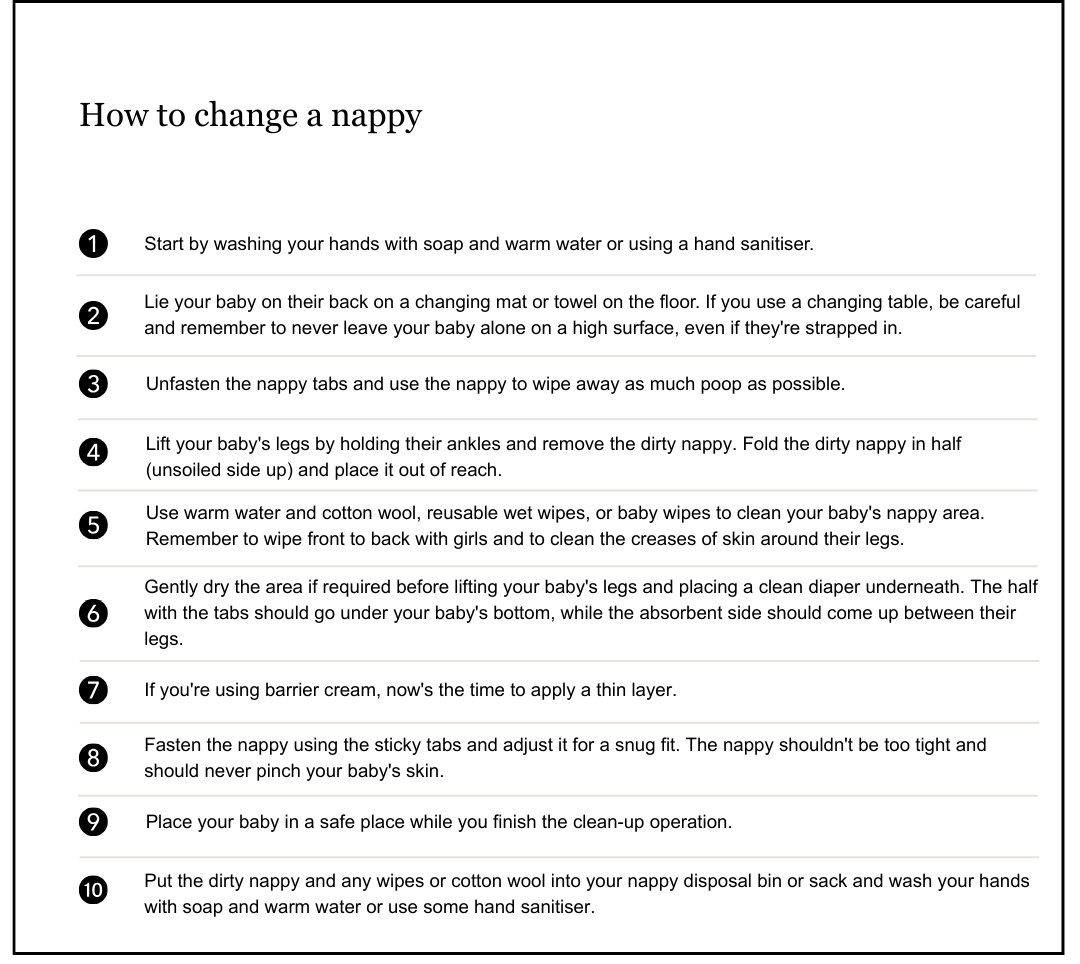
How to change a nappy during the night
Midnight nappy changing is one of the more unglamorous sides of parenting, but alas, it must be done. You may be wondering if it’s ok to leave the changing until morning.
Generally, if it’s just a number one and hasn’t soaked through the nappy, you should be fine to not change them straight away. This depends on the baby, however. If your baby has particularly sensitive skin, it can become sore and red if sat in a wet nappy for too long. Remember, parents know best, so trust your gut instinct.
Number twos, though? They’ve got to go. The longer baby poop stays in there, the higher the chances of your baby getting a rash.
Here are some of our top tips for successful nighttime nappy changes:
We all know how clumsy and disoriented we can feel when we’ve just woken up. Grogginess and nappy changing don’t go well together, so you’ll want to make things easier for your future tired self.
Scrambling around searching for wipes or clean sleepsuits can cause your baby to stir and get upset. Set everything out for yourself in an easy-to-reach spot each night to avoid a tired-fueled tantrum. You’ll both be back on your way to dreamland in no time.
Use dedicated nighttime nappies
Typically designed to be worn for up to 12 hours at a time, nighttime nappies are extra-large, extra absorbent, and extra friendly to exhausted parents.
These nappies are normally made of blanket-like material and promote airflow, making them super comfortable for extended wear. Their high absorbency not only reduces the urgency to change your baby but also helps keep the nappy rash at bay.
Your baby probably won’t even notice when they’ve gone number one. That means, less crying and more sleep for the parents – hallelujah.
Keep the lights low
This is perhaps the trickiest tip on the list, but believe us, it’s the one that will make the biggest difference.
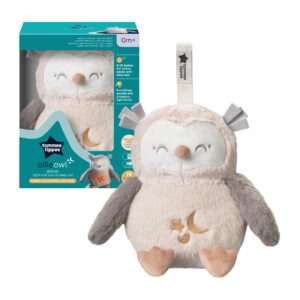
Your baby’s little eyes are super sensitive to light, especially when they’ve been sleeping in the dark for hours, so try to keep the room as dark as possible while you’re changing them will mean you can both get back to sleep quickly. If you really need to, you can use a soft nightlight to help you see what you’re doing. Our night lights are the perfect (and super handy) addition to baby’s room.
What to do with a dirty nappy after changing
Nappy disposal depends on what kind of nappies you use and your set-up. You can read our guide to disposable vs reusable nappies here.
Disposable nappies
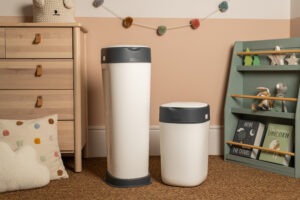
When they’re all changed and it’s time to dispose of your baby’s dirty nappy, a nappy bin with cassettes can help to trap in any odours and keep mess to a minimum. Remember that babies can suffocate or choke on plastic nappy cassettes, so store them in a safe place that’s well out of reach.
If you don’t have a dedicated nappy bin, you can roll and bag the soiled nappy, tie the handles of the bag firmly and put it in your outdoor bin as soon as possible.
Reusable nappies
If you’re using reusable cloth nappies, you’ll need a liner, cover and somewhere to store them, like a wet bag, before they’re cleaned in the washing machine.
When using reusable nappies, follow these steps…
- Once you’ve changed your baby, dispose of solids from the nappy down the toilet.
- Dispose of the used disposable liner in the bin, don’t flush it. If you’re using washable liners, add these to your wet bag to be washed with the nappies.
- When it’s time to wash them, used nappies should first go on a cold rinse cycle without detergent.
- After the cold rinse, the nappies should be washed again on a non-eco cotton wash. A 60°C wash is recommended for babies aged between three and six months. Once they’re over six months, you can wash lightly soiled nappies at 40°C, and heavily soiled ones at 60°C. Don’t use fabric softener, bleach, or harsh stain removers as these products can affect absorbency and damage your reusable nappies.
- Once they’re clean, you should air-dry your reusable nappies if possible, and keep them away from direct heat.
If you’re unsure of how to clean them, it’s best to follow the care label on your chosen brand of reusable nappy.