free shipping on purchases over R500
- There isn’t an exact number of poops a baby should do per day but on average, babies have about four poops a day during the first week of their life and this then decreases to an average of two per day by their first birthday.
- Baby poop stages start with the meconium poop which should happen within 48 hours of birth, it should then change to a greenish colour around days 3-4, then into a yellow colour around days 5-6 which it should generally stay until around 4-6 months or when you start to wean your baby onto solid foods.
- All babies are different, meaning different colours maybe normal to different people. A mustard yellow, pale yellow or pale brown are most common, but if it’s green on a regular basis this could indicate an infection, if its pink/red it could be a sign of blood and if it’s very pale/white it could indicate an underlying problem. You should always get your baby checked over by a healthcare professional if you’re worried.
- Poop comes in all sorts of shapes, sizes, smells and colours, but there are a few signs you should watch out for that could indicate a greater problem. These include diarrhoea, constipation, blood, regular green poop, pale poop or visible mucus.
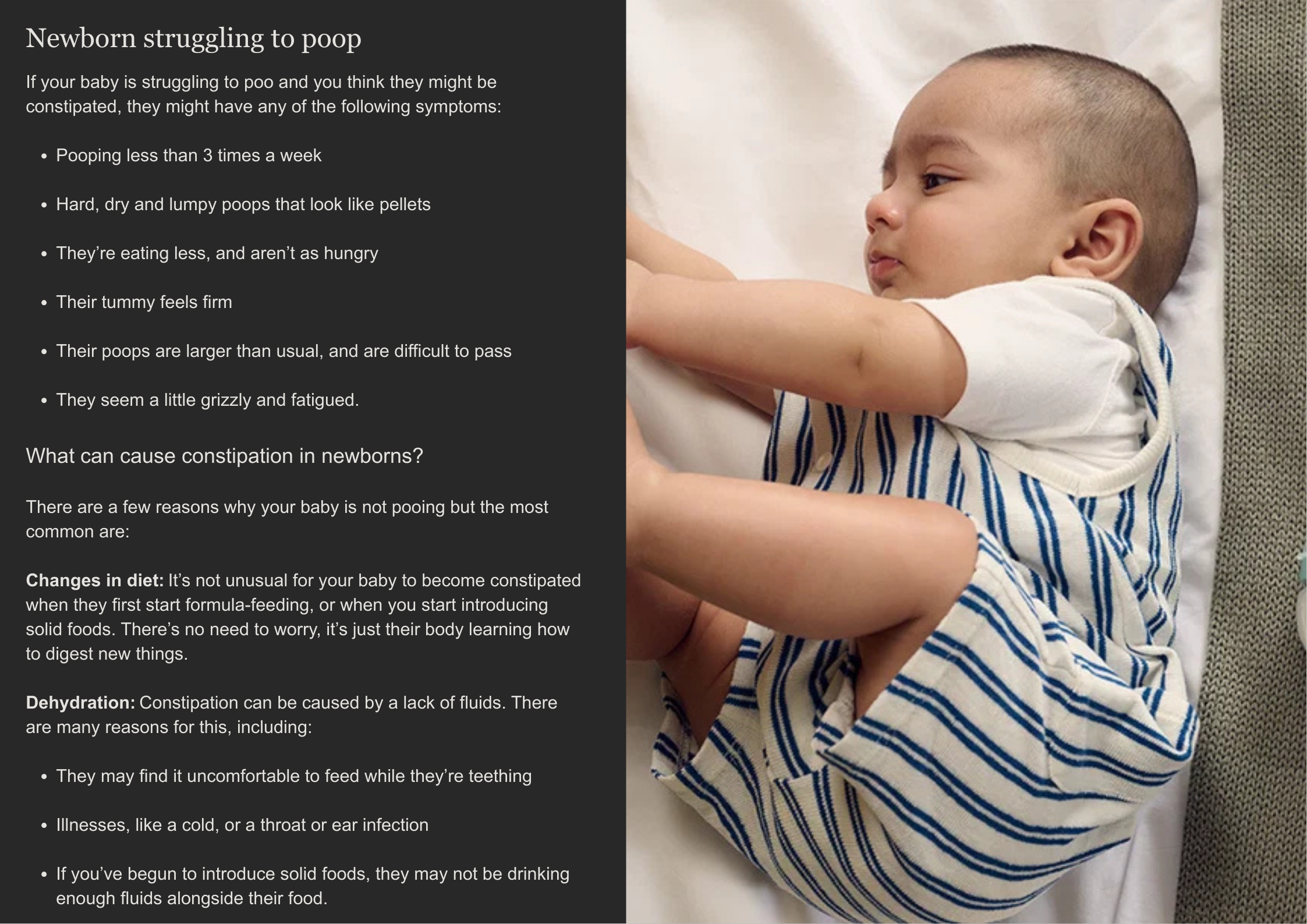
- Constipation in babies is very normal, and you can help them with their bowel movements by keeping them hydrated, using bicycling legs and giving them a baby massage.
When you break it down, newborn babies tend to do three things: eat, sleep and poop. And if you’ve recently become a parent, it may come as a shock to you just how many nappies your little one can get through in a day.
Newborn baby poop isn’t very much like its adult counterpart, which can take you by surprise when you first start changing nappies. Here’s everything you need to know about what’s normal and what’s not in the world of newborn baby poop.
How often should a newborn poop?
Do babies poop every day? While there isn’t an exact number of poops your baby should do each day, on average babies have about four poops a day during the first week of their life. This decreases to an average of two per day by their first birthday.
Breast milk is considered a natural laxative, so breastfed babies may poop after every feed during their first few weeks. Thankfully, this ‘in and out’ phase doesn’t last very long, and they might not poop for several days after the six-week mark. Formula-fed newborn babies, on the other hand, can poop up to five times a day. This reduces to as little as once a day after a few months.
If your baby seems happy and is eating well, chances are things are fine (even if you need to change them 12 times a day), but it’s always best to trust your parenting instinct and speak to your GP, midwife, or health visitor if you’re worried about your little one’s bowel movements.
Types of newborn baby poop
There are a few different baby poo stages, from meconium to normal newborn poop, and the colour and consistency may vary from day to day as their digestive system starts functioning. Let’s run through each stage in more detail.
Meconium explanation: Within 48 hours
Meconium is a baby’s first poop and it’s already in the bowel at the time of birth.
It’s dark, thick, and tarry, and can be sticky and hard to clean up. It contains cells and other substances that line your baby’s digestive tract during pregnancy. This usually subsides after three or four days. You should speak to your GP if your baby hasn’t passed any meconium 48 hours after birth.
Green poop: Day three to four
Greenish-coloured poop is usually a sign that the last of the meconium is leaving a baby’s bowel. During this stage, their poop is still dark but has a green tinge as they start to digest milk.
Yellow poop: Day five to six
From around day five, your baby’s poop may look like it has seeds in it. Newborn poo at this stage is usually runny, but not very smelly. If your baby is formula-fed their poop may have a slightly darker tan shade and might be a bit smellier!
Colours of newborn poop and what they mean
What colour should baby poo be? Whilst it can be a few different colours for different reasons, baby poop colour can be a good indication of their digestive health:
- Mustard yellow: Breastfed babies often poo yellow stools. The consistency will generally be loose (sometimes very loose!), and smell (semi) sweet – not like your average poop!
- Pale yellow or pale brown: Formula-fed babies might have semi-formed poops that are this colour, and they may strain a little to work this kind of poo out as it can be a little firm.
- Green: While a few green nappies are usually nothing to worry about, babies who frequently poop green, watery stools might have diarrhoea. It could be a sign that your baby has an allergy or intolerance, so it’s best to check this one out with your health advisor.
- Pink or red: Red or pink baby poop could be a sign of blood, but there’s no need to panic if you spot it. See your doctor and they’ll be able to tell you what’s going on. It could be a sign of allergies or constipation. Alternatively, if you see blood in your baby’s nappy, it could be harmless false or pseudo menstruation, a very light bleed from a baby girl’s vagina that’s caused by the effects of mum’s hormones on their baby’s system.
- White: Very pale, white poop is very rare, but it could indicate an underlying problem. Contact your doctor straight away if you spot this kind of poop.
What to watch out for with baby poop…
You already know that poop comes in all sorts of shapes and sizes (not to mention smells and colours). Because of this, it’s sometimes hard to tell when something is wrong.
Nevertheless, there are a few signs you should watch out for that could indicate a greater problem:
- Diarrhoea
- Constipation
- Blood
- Green poop
- Pale poop
- Mucus in poop
Signs of newborn diarrhoea
Newborn poops can vary hugely from baby to baby, week to week. If they’re eating well, gaining weight and growing, the chances are everything is fine.
It’s not unusual for a baby’s poop to be loose, but if they’re frequently passing watery stools, it could be a sign of diarrhoea.
What can cause diarrhoea in newborns?
Diarrhoea can be a symptom of many things, including:
- Infection
- Teething
- Antibiotics
- Dietary changes
- Allergies
It’s always best to get your baby checked out by a doctor if they have diarrhoea, to find out the root cause of their symptoms.
Remember, if your baby has diarrhoea, it’s important to keep an eye on their fluids. You may need to feed more frequently to help them get the extra fluids they need to avoid dehydration.
How do you help a baby poop
There are a few things you can do to help a baby poo:
- Keep them hydrated: If they’re older than six months and you’re formula feeding, offer them small sips of cooled, boiled tap water between their bottle feeds to prevent dehydration. If you’re breastfeeding, continue to offer lots of feeds (breastfed babies don’t need to drink additional water between feeds).
- Bicycle legs: Try lying your baby flat and gently move their legs in a bicycle motion to help relieve constipation.
- Baby massage: This is a lovely way to bond with them and can also help relieve constipation. Try rubbing their tummy clockwise, in slow downward strokes (make sure your baby is laying on their back, on a soft, safe and comfortable surface).
- A nice, warm bath: Warm water can help relax their abdominal muscles, discourage them from straining and soothe some of their discomfort. Read our guide to bath water temperature to make sure it is not too hot.
- Check their formula: Using too much formula powder when preparing a bottle can reduce the amount of water your baby drinks and therefore lead to constipation. We recommend that you always follow the manufacturer’s guidelines when preparing a bottle of formula for your baby.
Blood in baby poo
Blood in a baby’s stool is usually a symptom of constipation and can normally be remedied quite easily. Nevertheless, you should always consult your doctor to be on the safe side.
Why is my babies poop green?
Green poop is normal in newborns but could be a sign of infection in older babies. It’s often a sign in breastfed babies that they’re drinking all of the fore milk but not getting the rich milk at the end of the feed.
Pale baby poo
Very pale poop is a sign of jaundice, which is common in newborns. If it lasts longer than a couple of weeks though, you should consult your doctor.
Mucus in baby poop
Mucus in baby poo is often harmless and can just be due to normal gut secretions, swallowing extra saliva during teething, or the digestive system adjusting to new foods during weaning.
However, mucus could also appear due to mild infections such as a cold or stomach bug but again, this is nothing to worry too much about. If mucus keeps showing up or appears alongside other symptoms, it’s best to check with a healthcare professional.
While baby poop might not be the most glamorous part of parenting, it can tell you a lot about your little one’s health and development. From those first sticky meconium nappies to the more solid poos that come with weaning, changes in colour, texture, and frequency are usually a normal part of your baby’s digestive journey.
With all those baby poops, comes a whole load of nappy changes so if you need a few handy tips on how to change a nappy, we have you covered.
There isn’t an ideal number of urinations for a newborn baby, but if their nappy is wet regularly, that’s a good sign.
On average, a newborn baby’s first week might look like this:
- (24 hours after birth): Typically, 1 wee a day
- (Day 1 to 2): Typically, 2 or more wees a day
- (Day 3 to 4): Typically, 3 or more wees a day
- (Day 5 to 6): Typically, 5 or more wees a day
There is no ‘normal’ baby poop as every baby is different. Baby poop is constantly changing depending on your baby’s age, diet, and whether they’re breastfed or formula-fed. Just keep an eye on any sudden colour or texture changes and always check with a healthcare professional if you’re worried.
The term ‘heavy nappy’ means a nappy full of wee or poop, that’s due for a change.
While newborn baby poo can be softer in consistency than its adult counterpart, watery poo may be a sign of diarrhoea.
If you think your baby has diarrhoea, it’s best to take them to see a doctor (young babies can become dehydrated very easily, especially if they’re under 6 months old).
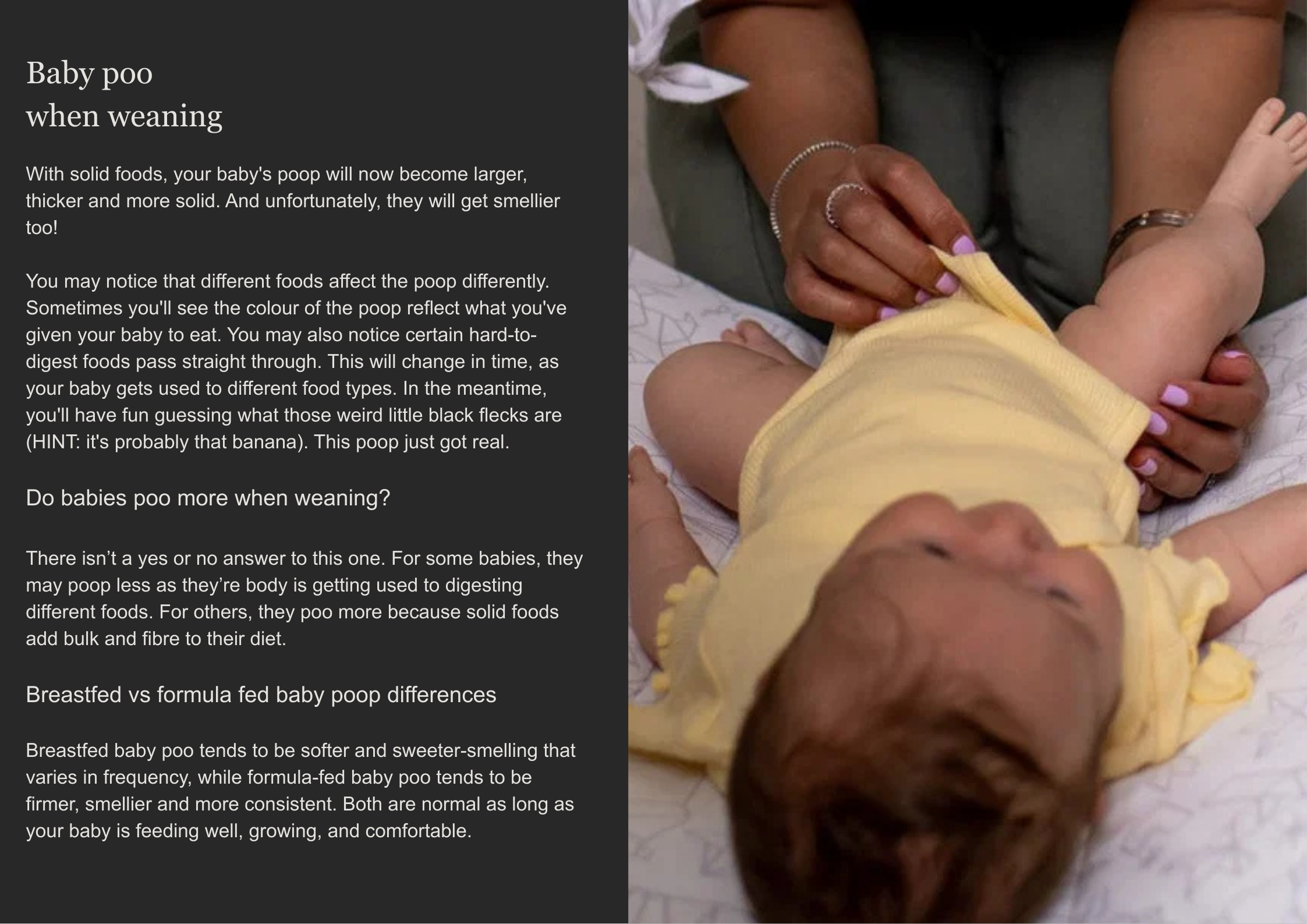
Baby poop will start to become solid when they begin their weaning journey, usually around 4-6 months.