free shipping on purchases over R500
Newborn & Baby
Nappy options: Reusable vs disposable?
Nappy options: Reusable vs disposable?
- Whether you opt for reusable nappies or disposable nappies will depend on your preferences and needs. If you’re changing a newborn, you’ll need more nappies to hand so having the disposable kind may be more convenient, but if you prefer to make environmentally friendly choices, you may choose reusable nappies.
- The benefits to reusable nappies are being planet-friendly and kinder to your child’s skin. However, it can become a timely and inconvenient task to keep on top of washing reusable nappies, and they can take a while to dry.
- The benefits to disposable nappies are having the freedom to change your baby on the go as you can dispose of the nappy while you change. And they’re also very absorbent due to the special polymers used during manufacturing. On the other hand, disposable nappies can become costly, they’re bad for the environment as they’re made from synthetic materials and can be more likely to cause nappy rash.
Nappies, nappies, nappies! Parents go through so many, but how much do we know about each type?
If you’ve recently become a parent, you’re probably shocked at the sheer number of nappy varieties on the market. Between disposable, biodegradable and reusable nappies, it can be difficult to know which kind to choose.
Recently, and by recently, we mean in the last 50 years, we’ve become hooked on disposability. And while disposable nappies certainly aren’t the best for the environment, they still have their benefits. On the other hand, reusable nappies are more eco-conscious and are more convenient in the sense you can keep on top of how many nappies you have available each day.
To help make your decision easier, keep reading to find out about the different kinds of disposable and reusable nappies, and discover which might suit you best.
The different types of nappies
Before we delve deep into the pros and cons of each type of nappy, here are the five main kinds of nappies available:
- Reusable nappies: Designed to be washed and used over and over (and over) again.
- Disposable nappies: To be thrown away after each use.
- Half-and-half nappies: These part reusable, part disposal nappies provide you with the option of reuse. You can fill them with either reusable or disposable inserts, giving you the option of throwing the mess away when you need to.
- Biodegradable nappies: Just like disposable nappies, these are designed to be thrown away after use. They’re typically made up of about 20-40% biodegradable materials, which makes them slightly easier to decompose.
- Swim nappies: Swim nappies are designed to contain all contents while your baby enjoys a splash, and they come in both disposable and reusable variations.
The pros and cons of disposable nappies
For many parents, disposable nappies prove a godsend. Though they might not be the most eco-friendly nappy choice, they’re certainly the most convenient.
Here’s an insight into their benefits:
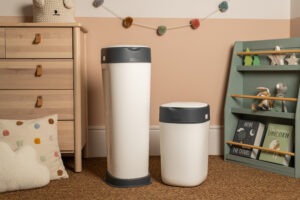
- Disposable nappies give you the freedom of changing your baby on the go without carrying a smelly used one around with you after. This makes them particularly useful for families who like to travel or go on frequent day trips with their baby. This also makes them suitable for our nappy bins, the smell-free way to dispose of dirty nappies.
- Disposable nappies contain special polymers that make them super absorbent, so they’re a great choice for babies who make a lot of mess!
Their cons:
- Like anything easily discardable, they do have their ecological downsides: In fact, it’s been estimated that disposable nappies can take up to 500 years to break down. Yikes!
- As they break down, they release harmful microplastics which then are added to soil and water.
- Due to being made from synthetic materials, a baby’s skin is more likely to be irritated when worn for a while.
- The cost of consistently replenishing nappies can add up over time.
If you’re conscious about your carbon footprint but are reluctant to give up the convenience of disposables, opt for biodegradable or ‘half-and-half’ nappies.
These alternatives will allow you to reduce your waste while still enjoying the time-saving advantages of disposable nappies. Talk about the best of both worlds!
Do disposable nappies expire?
No, disposable nappies don’t have an expiration date, but they can lose their effectiveness over time as the elastic and absorbency starts to wear.
The pros and cons of reusable nappies
Reusable nappies are also favored by parents who care about the environment, and like the idea of saving some pennies over the years.
Here’s some of their benefits:
- Reusable nappies are undeniably the most planet-friendly option out there. Cloth nappies help you reduce your household waste and save you some money while you do so. This is a particularly attractive benefit if you’re planning on having more than one child.
- Reusable nappies are kinder to your baby’s bottom thanks to their chemical-free makeup, something your baby might appreciate if they’re prone to nappy rash.
Their cons:
- Washing reusable nappies can become a mammoth task if you have more than one baby on your hands. Babies can need changing up to 12 times a day, we’ll let you do the rest of the math on that one!
- Cloth nappies can also take a while to dry, which can end up being a real pain if you have places to be and no backup reserves.
- Some reusable nappies require you to stock up on extras like wraps, liners and clips, so it’s important to choose the kind that’s right for you.
How do you use reusable nappies?
Reusable nappies are machine washable, so once your child has worn the nappy and you’re ready to change them, all you need to do is remove the absorbent insert and then pop the used nappy in the machine. It’s important they’re added to a full load and are washed at around 40-60°C.
How many reusable nappies do I need?
To ensure you’re always prepared with a nappy to hand, we recommend you have 15-25 nappies if you put on a wash every day, or 18-20 if you do a wash every other day. This is especially important for newborns as they have more regular changes.
Are swim nappies reusable?
Yes, many swim nappies are reusable as they’re made from specialist fabric that can hold contents while letting water flow through.
The different types of cloth nappies
If you value being eco-friendly, you’ve probably decided that cloth nappies are the best option for you. But one thing you might not know is there’s several types of cloth nappies available on the market.
Here are the different kinds of cloth nappies available to buy in the UK:
- All-in-ones: All-in-ones are super convenient and easy to use as they’re designed just like disposables. They feature an adjustable Velcro fastener that allows you to put them on easily, and in a way that fits your baby snugly. The very best thing about all-in-ones? They contain an absorbent liner that’s sewed into the nappy, meaning there’s no need for extra inserts. All-in-ones tend to cost a little more than other kinds of reusable nappies, but their user-friendliness is worth every penny.
- Pocket style: Also known as ‘stuffables’, these nappies have a pocket opening through which you can conveniently stuff absorbent inserts. Pocket nappies allow you to switch up the absorbance of inserts dependent on your baby’s needs. They’re particularly useful for travelling and long journeys. So, you can add an extra-absorbent ‘booster’ to tide you over until you reach your destination. The versatility of pocket nappies makes them ideal for day to night wear, or for prepping your child for childcare.
- Pre-fold: Pre-fold nappies are the most economical option if you’re opting for reusables. They’re made up of a rectangular cloth, a fastener and a waterproof cover. The cloth is usually made from cotton, making it ultra-soft and a great option for sensitive skin. You’re also given greater freedom of choice when it comes to colour and pattern, meaning you can switch things up to match your baby’s outfit.
Whether you opt for reusable or disposable nappies is down to preference and your needs, especially going by age. But as long as you stay prepared with enough nappies to hand, that’s all that matters. If you found this article helpful, read our guide on how to change a nappy.