

 free shipping on purchases over R500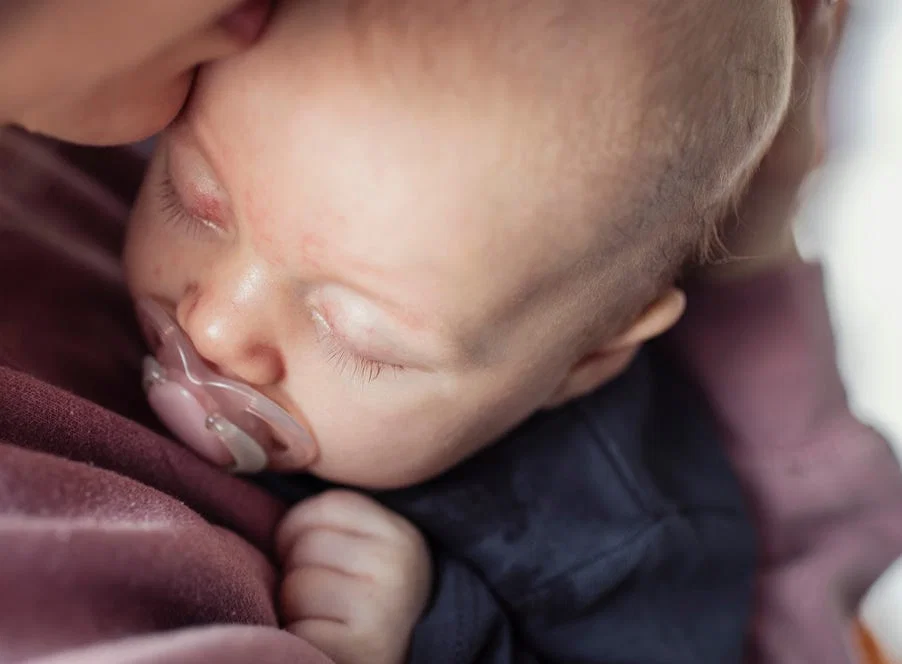
- Nap routines support healthy brain and body development, regulate sleep patterns, reduce tiredness and fussiness, and make falling and staying asleep much easier for your little ones.
- The best way to help your baby nap is to establish a nap schedule, distinguish between playtime and sleep time, create a snoozy environment, keep naptime consistent, and avoid car ride naps.
Naps are super important for your baby’s development. As they grow and learn, their little brain needs downtime to process, restore, and renew. Plus, them nodding off for a nap gives you a few hours a day to regroup and get organised or zone out with some much-needed me-time – don’t forget that grown-ups can nap too!
As important as naptime is, it can sometimes be tricky to get a baby to nap during the day when it’s light, bright, and they’re surrounded by potential distractions. Sticking to a regular schedule can help, but every baby is unique – so it’s usually a case of trying a few different methods and techniques to see what works best for you both.
Let’s dive into everything you need to know about baby nap schedules that’ll give you an extra helping hand.
How to get your baby to nap
Here are some of our expert’s top tips for how to get your baby to nap:
1. Establish a baby nap schedule
Just like an adult’s, a baby’s body clock tells them when they’re hungry or tired, but they can’t feed themselves or climb into bed on their own without your help. For this reason, try creating a consistent nap routine that you can maintain that acts as their bedtime routine.
We recommend you don’t plan your routine by the clock. Instead, base it on wake windows and sleep cues.
Why are nap routines important for babies?
Nap routines not only help you both map out the day, but they’ll support healthy brain and body development, regulate sleep patterns, reduce tiredness and fussiness, and make falling and staying asleep much easier for them.
2. Questions to ask yourself
- Is it nearly the end of my baby’s appropriate wake window?
- Is my baby showing any of their usual sleep cues?
After a few weeks of practice, your baby will hopefully fall into a natural rhythm that’s roughly the same every day. You’ll soon get into the swing of their daily pattern by following their lead and learning together.
What are ‘wake windows’ for babies?
Wake windows refer to the segments of time your baby can stay awake comfortably between naps or bedtime before they become overtired. They signal to a parent when it’s time to put their baby down for sleep, but they can vary by age.
3. Baby sleepy cues to watch for
Try and stay focused on your baby’s tiredness cues. These may include eye-rubbing, yawning, finger-sucking, pulling their ears, and general fussing.
Aim to put your baby down for a nap when they’re awake but starting to show these signs of feeling sleepy. And always place your baby on their back to sleep with their feet firmly against the end of the cot.
“I always tell parents to put their baby down for their nap within 15 minutes from their first yawn”, says Miriam Sauter, Paediatric Sleep Consultant at Early Sleep.
If you miss your baby’s signs of fatigue, you’ll notice that they quickly move past the tired spell and become overtired, teary, and extra fussy.
To learn their cues, watch them in the hour after they first wake up in the morning, and then compare this to their behaviour when they’re tired as their usual bed or naptime draws near.
4. Distinguish between playtime and sleep time
All sorts of sights and sounds are engaging for a child, so it’s pretty easy to make their wake time as interesting as possible.
Even a trip to the shops or getting some fresh air and daylight at the park can be enough to make sure they’re sleepy in time for their scheduled nap. Getting out and about also helps your baby to distinguish between when it’s time to play and time to catch some Zzz’s.
5. Create a snoozy environment
Life happens, and we know it’s not always possible to have your baby in their cot or moses basket for every naptime. But it’s important to make sure that they’re comfortable and safe when they’re sleeping.
The perfect nap environment is recognisable, cool (16-20ºC) and relatively quiet. Don’t worry about making the room dark or start to stress if there’s some background noise. It’s good for a baby to get used to napping in an environment that’s not perfectly silent and pitch black as it helps them learn the difference between day and night. However, if it’s an extremely bright room, you can always blackout blinds.
Miriam recommends: “If possible, you want to aim for a room temperature of around 18ºC. As parents, we often worry about our babies being too cold, but they actually sleep much better in cooler temperatures. Just make sure you use a temperature-appropriate tog-rated sleeping bag and clothing to wear underneath. Avoid any loose or extra bedding.”
To be extra sure, room thermometers can give you extra peace of mind that your baby’s room is at the optimum temperature.
6. Keep naptime consistent
This applies to everything from the time that you take them to bed to the number of books you read. It’s quite common to put your baby down after a feed, so they associate being full and content with naptime.
7. Avoid car naps
All babies take a snooze in their pram or car seat from time to time, but your baby should nap in their moses basket or cot for the most part.
It’s ok for your baby to fall asleep in their car seat when you’re travelling, but they should be taken out as soon as you get home or arrive at your destination. Make sure they’re then placed onto a firm, flat surface (like a cot or moses basket) to sleep.
To avoid car naps altogether when driving with your newborn, you can try opening a window to let in some fresh air or sing and chat to them to keep them awake until you’re home.

Napping is key to helping your baby grow and develop during their early stages of life, and with a baby nap schedule in place, this can make days much more manageable for you and your baby.
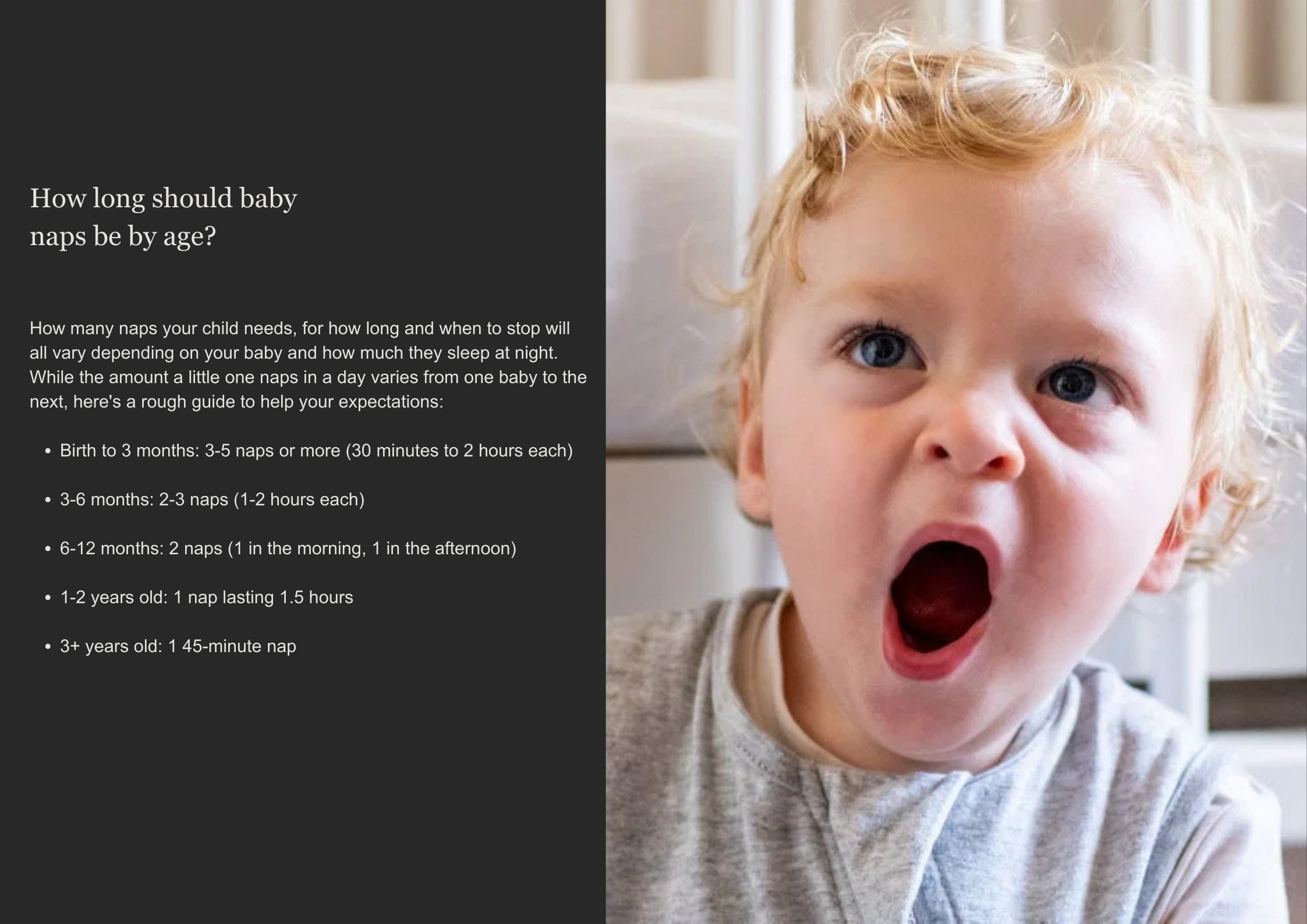
All children are different, but most still nap at least once a day at the age of 3. However, by the age of 4, most no longer need naps.
Here are some signs to look out for that they’re ready to drop their daytime nap:
- They have difficulty falling asleep at nap time or bedtime
- They’re waking up early
- They don’t seem sleepy on days when they don’t have a nap
- They’re not napping at all
Remember that it all very much depends on your toddler. While some toddlers will stop napping very happily on the first day, others will need the change to happen more gradually.
There’s always the option of a designated rest time instead of an actual nap with some down time to play with toys or read a book. While you’re transitioning away from daytime naps, your baby might need to go to bed a little earlier – this is quite normal.
When do babies drop to two naps?
Usually, you’ll find that your baby will drop to two naps at around 6-9 months old, but some may transition even earlier or later, depending on their individual needs.
As babies grow and develop, so does their circadian rhythm. Not only does a baby’s circadian rhythm help them to wake up in the morning and trigger their sleepiness at night, but there’s also parts of a baby’s day where the circadian rhythm plays an interesting role.
At around 3-4 months of age, biological nap rhythms also begin to develop in babies, and these become well established by 6 months of age. These nap windows are parts of a baby’s day where they have a natural dip in energy and want to sleep more than other times in the day. This is, of course, governed by their internal biological rhythms whereby melatonin (the sleepy hormone) rises a little, cortisol levels drop a little, and so does their body temperature.
These windows occur between 9-10am, 12pm-2pm and 6-7pm. Sleep that starts within these windows is usually easier to achieve and more restorative than sleep outside of these windows.
Before your baby can stay awake for 2 hours, these windows will be hard to reach. But once your baby is around 4 months of age, it should be easier for them to nap within these windows. It’s not a rush – just a gentle goal to keep in mind.
There are several ways teething can affect a baby’s nap routine, especially as they’re likely feeling uncomfortable and irritable. Here’s what to expect:
- Makes it harder for babies to fall and stay asleep
- Causes shorter, more restless naps
- Increases night and naptime waking
- Leads to fussiness or irritability before and after naps
- Can disrupt established baby nap schedules