

 free shipping on purchases over R500
Newborn & Baby
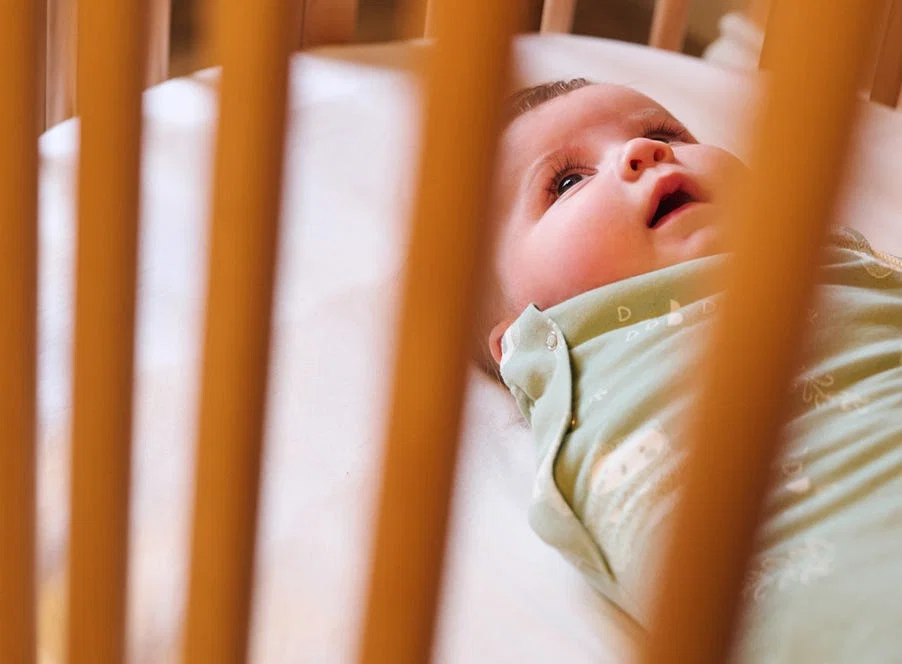
A guide to safe sleep for babies
A guide to safe sleep for babies
- Always place your baby on their back to sleep to keep their airway clear and reduce the risk of SIDS.
- Use a firm, flat mattress and keep the cot free from pillows, toys, loose bedding, and sleep positioners.
- Share a room (but not a sleep surface) with your baby for the first six months to support safer sleep.
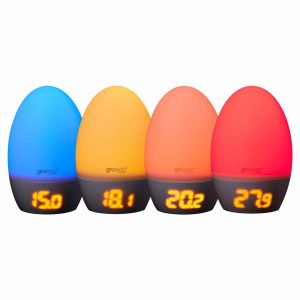
- Keep the room between 16–20°C and dress your baby in a sleep bag or lightweight layers to avoid overheating.
- Move your baby to a firm, flat sleep surface as soon as possible if they fall asleep in a pram, swing, or car seat.
- Stop swaddling as soon as your baby shows signs of rolling to keep them safe during sleep.
At Tommee Tippee, safety is at the heart of everything we do. We always advise parents to consider these safe sleep guidelines from The Lullaby Trust.
These are most important during a baby’s first six months, when SIDS risk is at its highest. Let’s delve into what these guidelines are and how to achieve them.
Always place your child on their back (not their front or side) to sleep
- Special equipment or products are not needed to keep them on their back.
- Once they start to roll from front to back by themselves, you can leave them to find their own position for sleep.
- Practising tummy time while your baby is awake can help to strengthen the muscles needed for rolling over.
Give your baby a clear, safe sleep space in the same room as you
- Babies should always be in the same room as you for the first six months for sleep, day and night.
- Use a cot or Moses basket with a firm, flat mattress with no raised or cushioned areas.
- Don’t use pillows, quilts, duvets, bumpers, pods, nests or sleep positioners.
- Make sure your baby’s head is kept uncovered so they don’t get too hot.
- Try to keep the room temperature between 16°C and 20°C so your baby does not get too hot or cold and make sure bedding is appropriate for the time of year.
- If using a baby sleeping bag, no extra bedding is needed.
- Place baby at the bottom of the cot so that they cannot wriggle under covers, this is called ‘feet to foot’.
- Ensure that the sleep space is kept clear of all items and there’s nothing in reach like blind cords, nappy sacks, or soft toys.
- Babies should not be allowed to sleep in bouncy chairs and should not be left sleeping in the car seat when not travelling in the car. Car seats are not to be used as sleep spaces in the house.
Keep their environment smoke-free before and after birth
- Smoking in pregnancy greatly increases the chance of SIDS. All pregnant women should make every effort to take up the help to stop smoking provided locally.
- You should also avoid being exposed to others’ smoke when you’re pregnant. If your partner smokes, they can get help to quit too.
- Keep your baby away from smoke in your home, car and out and about.
Never sleep with your baby on a sofa or armchair
- Sofas and armchairs are dangerous places to fall asleep with your baby. Move somewhere safer if you might fall asleep.
- The risk of SIDS is 50 times higher for babies when they sleep on a sofa or armchair with an adult. They’re also at risk of accidental death as they can easily slip into a position where they’re trapped and can’t breathe.
Check on your baby to make sure they’re not too hot or cold
- A room temperature of 16-20°C - with light bedding or a lightweight, well-fitting baby sleep bag is comfortable and safe for sleeping babies.
- The best way to check on your baby’s temperature is by putting your hand on the skin on their chest or the back of their neck. Don’t use their hands or feet as a guide as they’ll always feel cooler than the rest of their body.
- If your baby is too hot, you’ll feel the skin is hot, slightly clammy or sweaty, and you’ll need to remove some layers.
Yes, baby sleeping bags are safe when they’re the correct size and tog for your baby’s age, weight, and room temperature. They help prevent overheating and reduce the risk of loose bedding covering a baby’s face. Always make sure the neck opening is snug so your baby can’t slip down inside the bag.
No, side sleeping isn’t recommended for young babies. It increases the risk of rolling onto their stomach, which is linked to a higher risk of SIDS. Babies should always be placed on their backs for every sleep until they’re strong enough to roll independently in both directions.
No, it’s not safe to place a baby to sleep on their stomach. Stomach sleeping can restrict airflow and is associated with a higher risk of SIDS. Always put your baby down on their back. If your baby is older, can roll both ways confidently, and does so during sleep, you don’t need to reposition them. Always place them on their back initially.