

 free shipping on purchases over R500
- You can use dummies while breastfeeding, but in moderation while ensuring they don’t interfere with your breastfeeding routine. To combat this, offer the dummy primarily for comfort and sleep, rather than as a constant pacifier.
Many parents wonder if giving their baby a dummy will interfere with their breastfeeding journey. While there are some things to consider when it comes to using dummies while breastfeeding, it’s important to remember that they don’t have to be a barrier to a successful breastfeeding journey.
As every new and existing parent knows, babies sometimes need additional comfort or reassurance, and that’s where dummies can come in handy. And with the right approach, you can safely use dummies to soothe your baby without compromising your milk supply or your breastfeeding routine.
In this simple guide, we’ll give you some practical tips and advice on how to use dummies when breastfeeding, so you can make informed decisions about what’s best for you and your baby.
The benefits of breastfeeding
First and foremost, it’s important to understand the advantages of breastfeeding to help you make the decision of whether this is the best route for you.
For babies, breast milk provides all the necessary nutrients while protecting them from infections and supporting healthy development.
For parents, breastfeeding is free and convenient. It can also help to reduce the risk of postpartum depression and strengthen the bond with your baby.
Understanding dummies
It’s also important to understand why dummies are a fantastic tool for babies and parents alike. Dummies (also known as pacifiers or soothers) are small, nipple-shaped objects that babies can suck on.
They’re often used to soothe babies and satisfy their sucking reflex. Also, babies with colic can sometimes find comfort from sucking a soother in between feeds. This is especially helpful for parents when they’re undergoing day to day tasks as it’ll allow them to focus, and they’re also left confident that’s what their baby was needing.
Can a dummy effect breastfeeding?
While dummies can be a helpful tool for soothing babies, it’s important to use them in moderation and ensure they don’t interfere with your breastfeeding routine. A good approach for dummies and breastfeeding is to offer the dummy primarily for comfort and sleep, rather than as a constant pacifier.
When can I give a dummy if breastfeeding?
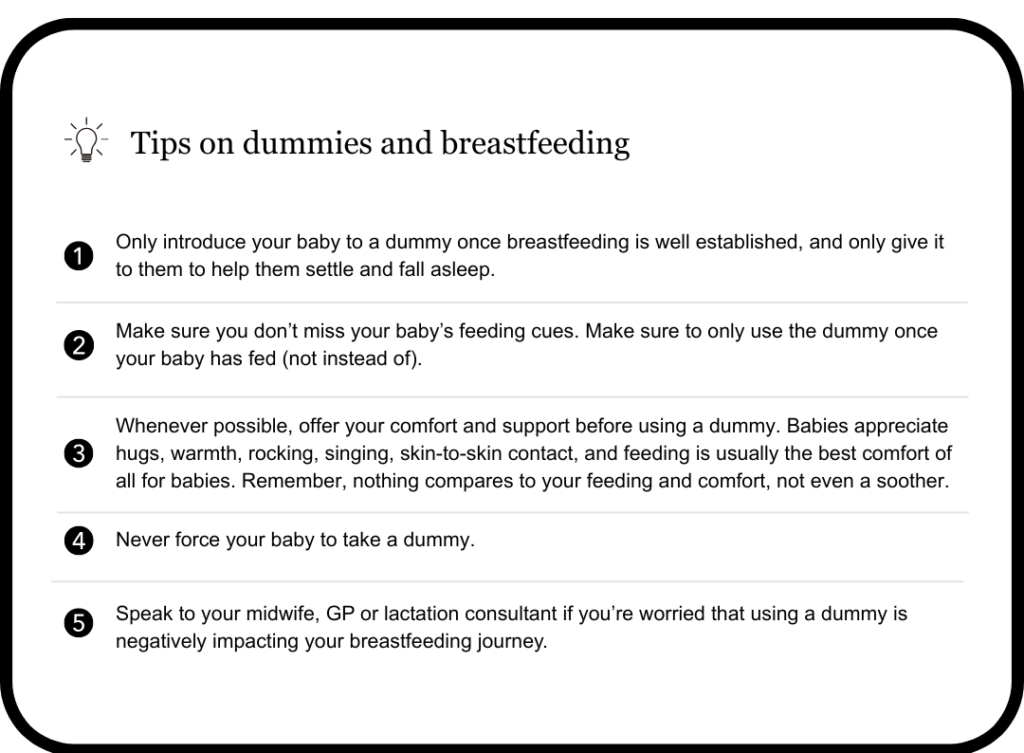
If you’re breastfeeding and decide to give your baby a dummy, you should wait until your baby’s breastfeeding schedule is well-established (usually at around 4-6 weeks old) before you introduce a soother into their routine.
This is to reduce the likelihood of the dummy impacting your breastfeeding routine. While they might not affect it at all, it’s important to be cautious either way.
Breastfeeding and dummies: Can a dummy effect breastfeeding?
Dummies might impact your breastfeeding journey if they’re not used correctly.
- Reducing breastfeeds: According to NCT, the use of dummies can decrease how often, as well as how long, babies are breastfed.
- Latching issues: Using a dummy may affect the way a baby latches to the breast when feeding.
- Nipple confusion: While some babies can easily transition between breast and a soother, the different sucking actions involved can sometimes lead to nipple confusion. This happens when a baby struggles to latch onto the breast properly due to the differences in shape, feel, and sucking requirements between the breast and a soother. Signs of nipple confusion may include fussiness at the breast, refusal to breastfeed, or pulling at the nipple.
- Breast milk supply issues: A dummy may change how often a baby breastfeeds, which can affect your breast milk supply. However, if you only offer your baby a dummy occasionally or when they fall asleep without missing their feeding cues, it’s unlikely that your breast milk supply will be affected.
Can pacifier use lead to early weaning from breastfeeding?
Research around this topic is mixed. Dummies may cause early weaning due to problems with latching, milk supply and the baby’s preferences. But it’s said that the use of soothers isn’t the direct cause of early weaning, but more of a symptom.
Balancing dummy use and breastfeeding
If you notice any signs of nipple confusion or difficulty latching, it might help to limit or temporarily stop dummy use. This could be a sign that the baby is becoming confused between your nipple and their soother.
Ultimately, the best approach is to find a balance that works for you and your baby and speak to a lactation consultant if you have any concerns.
Should I use a dummy if my breastfed baby is colicky?
You can introduce a dummy to a colicky baby. It’s safe and may help with comforting them. But we recommend they’re well-established in their breastfeeding journey (4-6 weeks in) before they use a soother.
When to stop using a dummy for a breastfed toddler or child
The same rules apply with dummies overall. You should begin weaning your baby off dummies from 12-18 months with vision of them stopping altogether at 2 years old.
While dummies are a comforting tool for babies, they must be used in moderation so that they don’t have any impact on your breastfeeding journey.