free shipping on purchases over R500
Every baby develops at their own pace, with some learning to talk from 12 months old, to others not saying their first word until they reach two years of age.
It’s important to remember that how your baby develops isn’t a reflection of how you parent, nor does it necessarily indicate they will find their development periods challenging.
Every baby is different, and with small, everyday actions, you can make a huge difference in their individual growth and learning journey.
How can I improve my baby’s development?
As a parent, there are many things you can do to improve your baby’s development. Whether it’s encouraging them by getting involved in their playtime, purchasing them sensory toys, or finding your ground in a sleep routine that works for them, the list goes on.
Baby development tips
Below, we’ve put together some of our top baby development tips for each age group.
0-3 months: Building foundations
Parenting a newborn is all about bonding, understanding their needs and establishing a routine that works for both of you. As it’s your number one priority to make sure your baby is growing and developing well, here are some tips to help smoothen the process:
- Set quality time aside for skin-to-skin contact, solidifying the parent and baby bond. If this takes longer than you expected, there’s no need to worry. Bonding can take longer as you deal with the many life adjustments that come with having a child.
- Give your baby tummy time to strengthen their muscles. All you need to do is pop them on their belly while they’re awake a few times a day to help strengthen their neck and shoulders, while developing head control and core strength. Make sure you wait a couple of days after giving birth to start this process.
- Respond to their cries promptly to build security and trust with your baby. During the early stages, this is how you’ll begin communicating with your child so getting to know their needs and reassuring them is key.
- Surround them with high-contrast toys to stimulate their vision. Although babies are not able to fully play with toys as a newborn, letting them view vibrant colours and patterns can aid their brain and coordination development.
- Check your baby is getting enough nutrition. They’ll gain the most nutrients during the first six months of their life from breast milk or formula before solids are introduced. To check your baby is getting all the nutrients they need, check their nappy as the contents of it will give you the answer.
6-12 months: Movement and communication
Before you know if you’ll be on the countdown to their 1st birthday, which means they’re now moving, communicating, trying new foods and everything else in-between. Below are some tips during this whirlwind stage:
- Encourage crawling and standing with your support so they grow their confidence earlier while reducing the amount of falls they have. Start small by holding their hands, before long, they’ll be pulling themselves up on every surface possible.
- Play peekaboo to build memory and object permanence. This technique (and easy game!) will help your baby understand that an object can still be there while not in sight. It’s also fantastic for improving their problem-solving skills as they grow.
- Provide soft foods for early self-feeding skills. On top of the minefield that is weaning, finger foods are great for teaching your child how to eat by themselves, while also improving their hand eye co-ordination.
12-24 months: Independence and learning
Now your baby has surpassed their first big milestone, it’s time to get stuck into helping them learn to walk, talk and play.
- Help them practice walking within safe spaces so they can continue building their confidence while feeling a sense of independence without any hazards affecting their progress.
- Give them simple puzzles and stacking toys for problem-solving development. These will help your child develop their curiosity and patience, which are vital as they grow up. Their thinking skills and understanding of cause and effect will also improve.
- Introduce early words through books and songs. Starting simple with the odd word or lyric will help them explore sounds and patterns of words. If you incorporate some actions or repetition into the mix, you’ll also teach them about the structure of spoken language.
- Encourage pretend play to spark their imagination so they actively create scenarios and explore a range of roles as they develop their problem-solving skills further. You’ll introduce a safe, creative space that’ll contribute to their cognitive development while also boosting their social skills.
0-3 months
- Lifting their head during tummy time
- Following objects with their eyes
- Recognising their parents’ voices
- Smiling for the first time
3-6 months
- Rolling over in both directions
- Laughing and cooing more expressively
- Reaching for and grabbing objects
- Making eye contact
- Taking interest to their surroundings
6-12 months
- Sitting up without any assistance
- Crawling or attempting to move by themselves
- Responding to their name and simple words like ‘bottle’
- Repeating sounds they hear
- Using their hands to communicate
12-24 months
- Taking their first steps
- Saying a few simple words
- Copying simple actions like clapping or waving
- Learning how to balance and climb
- Understanding instructions clearer
0-3 months
- High-contrast black and white toys for vision development
- Soft rattles for grasping and soothing sounds
- Sensory play mats for tummy time for a stimulating environment
3-6 months
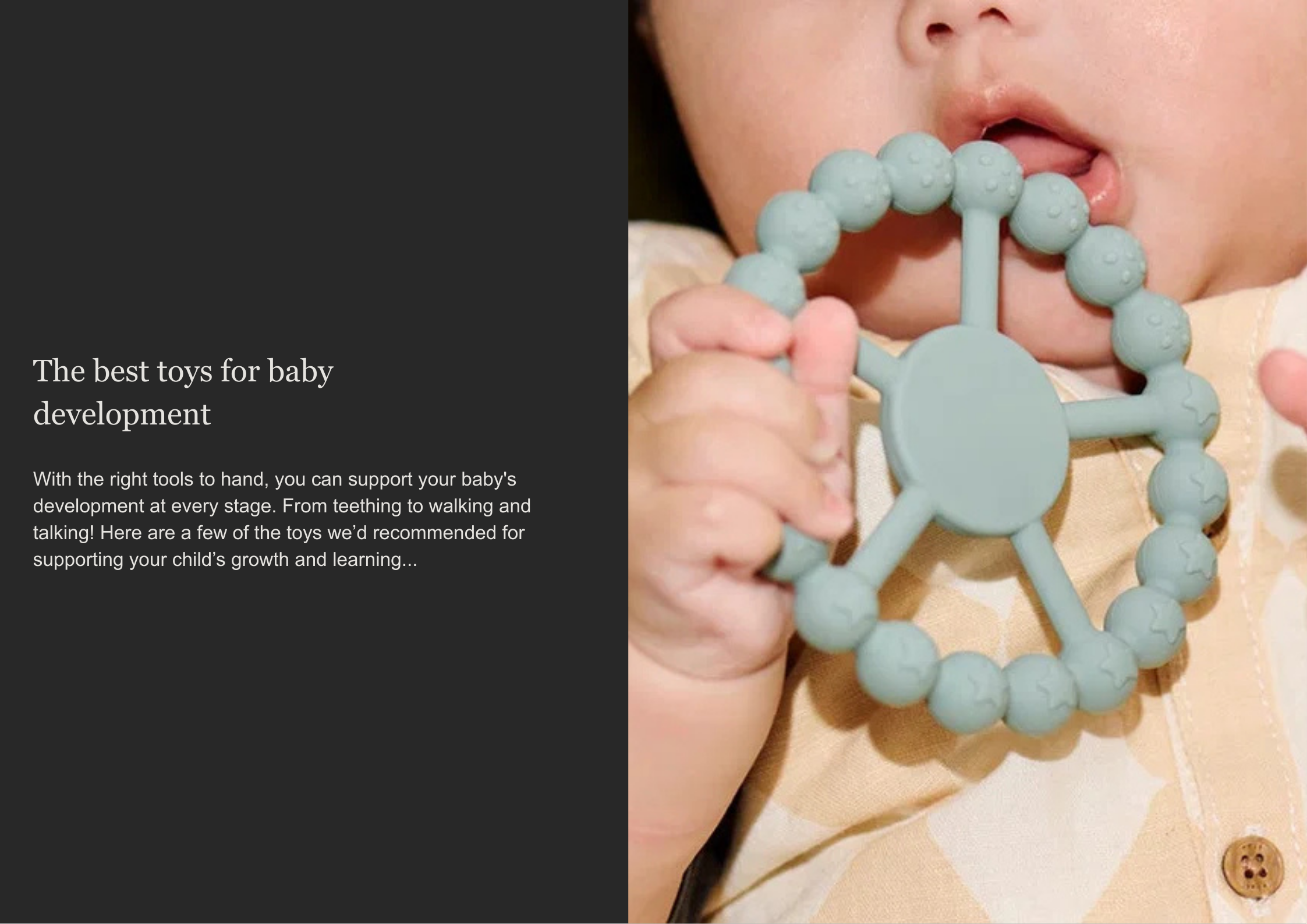
- Teething toys for oral development
- Activity gyms with hanging toys for motor skills
- Mirror toys for self-recognition
6-12 months
- Stacking cups and blocks for motor skills
- Musical toys to encourage rhythm and movement
- Push-and-pull toys for coordination
12-24 months
- Ride-on toys for improving balance
- Simple shape sorters and puzzles for problem-solving skills
- Dolls or stuffed animals for emotional development
Things that can harm your baby’s development
Every parent wants their baby to develop at an optimal rate. Here are some things to be mindful of to avoid any setbacks in the process:
- Lack of tummy time: Tummy time is essential for motor skill development. Without it, learning how to properly move their body may be delayed.
- Too much screen time: Although children love the vibrant colours and quirky noises that come out of the screen, relying on devices can reduce their real-world learning and interaction with others.
- Limited social interaction: Getting out and about with your baby is key to their language development. Have them meet new people by joining some parent-baby classes, beneficial for both of you.
- Neglecting sensory play: The best way for your child to learn is through touch, sounds and movement. Sensory play allows them to explore colours, textures and noise so they can begin distinguishing what happens as a result of an action.
- Poor sleep habits: While it can be easier said than done during the early stages, getting your baby into a healthy sleep routine is vital for brain growth and emotional regulation.
- Overuse of baby equipment: Let your child explore the home (safely) and support themselves when standing up, as over-using swingers and walkers can impact their muscle development.
Thinking too much about your child’s development can be worrying, so try not to compare your baby to other little ones. Every journey is different, but if you are concerned, there’s nothing wrong with reaching out to your GP for reassurance.
Overall, it’s a rewarding process to be involved in. It might not always be plain sailing, but with time and patience as your baby learns and grows at their own pace, they’ll develop exactly how they should.
Every child is unique so don’t spend your time worrying. Instead, encourage them to engage and play as you both enjoy each stage of the journey.