free shipping on purchases over R500
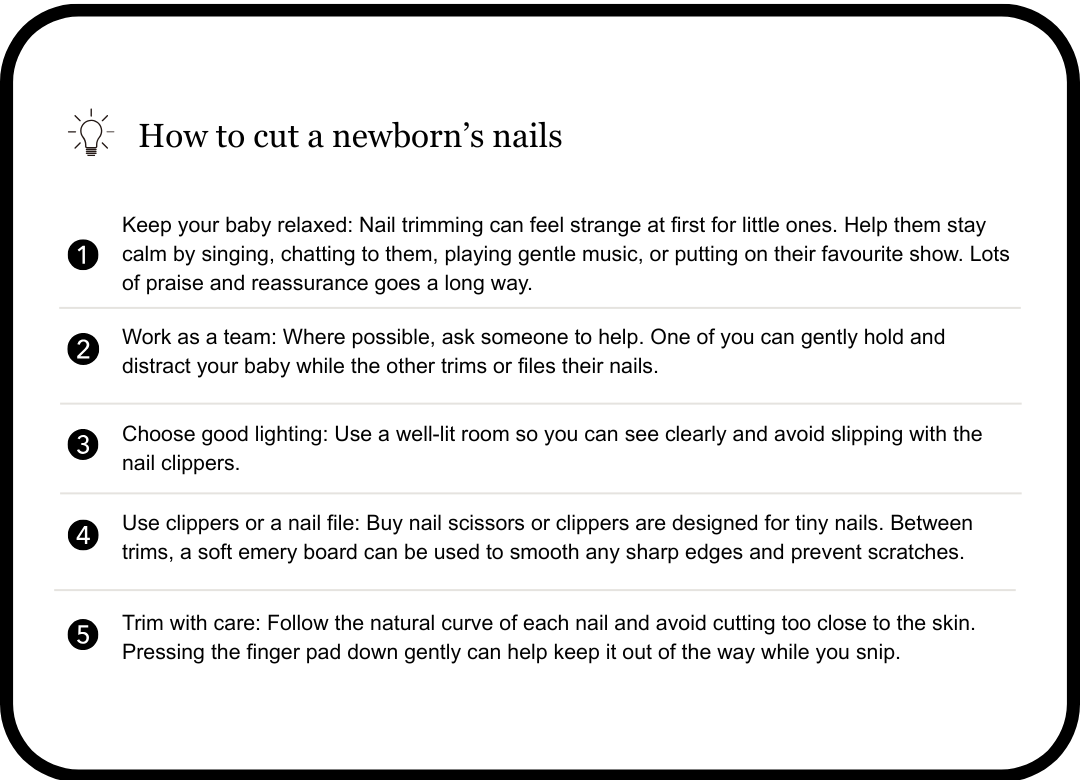
- Trim nails when your baby is calm, sleepy or sleeping, or after bath time for easier cutting. This makes their nails softer and reduces fussing, so you can trim more safely and with less stress.
- Use baby-safe clippers, rounded scissors, or a soft emery board to gently trim nails. Always press down on the fingertip pad to create space between skin and nail and cut slowly in good lighting to avoid nicking their skin.
- Trim your baby’s nails regularly and avoid cutting them too short, cut toenails straight across to prevent ingrown nails, and file rough edges smooth. If you accidentally nick the skin, gently press with a soft cloth, soothe your baby, and avoid using plasters where possible to avoid choking hazards.
Trimming a newborn’s nails can feel a little nerve-wracking at first. They may be small, but baby nails grow quickly and can become sharp enough to scratch delicate skin if left too long.
The good news? With the right approach, nail care doesn’t need to be stressful. We’re here to help, and we’ll guide you through when and how to trim your baby’s nails, along with some simple tips to make the process easier and more comfortable for both of you.
Soon, you’ll be a mini mani-pedi pro for your baby.
When can you cut a baby’s nails?
Even though a newborn’s fingernails are soft and often wear down on their own, they grow surprisingly quickly. To avoid accidental scratches, they’ll need gentle trimming from the very beginning.
You can safely cut or file your baby’s nails as early as their first week. After that, be prepared to check them regularly – during those first few weeks, they may need a trim every two to three days depending on their growth.
The best time is usually when your baby is calm, sleepy, or just after a bath, when their nails are softer. Some parents find trimming easiest while their baby is feeding or even asleep, as fingers and toes tend to stay still. Always choose a quiet moment where you won’t feel rushed. Patience makes the process safer and less stressful.
It’s a good idea to keep a small healthcare kit with nail clippers in your changing bag. That way, you can tend to your baby’s tiny nails, wherever, whenever.
Because a baby’s nails are so soft, it might feel easier to peel or bite them instead of trimming. However, this can cause problems and there’s a risk of taking too much nail off, exposing the delicate skin underneath which may pass germs onto your baby.
If you’re not confident using clippers or scissors just yet, a gentle alternative is to file their nails with a soft emery board. This smooths sharp edges safely without the need for cutting.
Accidents can happen, so try not to worry if you accidentally nick your baby’s skin while trimming their nails. If bleeding occurs, gently press a clean, soft cloth or pad onto the cut until it stops. Avoid using plasters or dressings, as these can pose a choking hazard.
If you’re concerned about the cut or if the bleeding doesn’t stop, contact your GP for advice.
You’ll notice that a baby’s toenails grow much more slowly than the nails on their hands.
Because they require less maintenance, toenails usually only need trimming about once a month. Trim them straight across to help prevent ingrown nails and keep feet comfortable.
Babies with sensitive skin need a gentle approach. For very sensitive nails or skin, consider using a soft emery board between trims to smooth edges safely without cutting.
If you’re not ready to use clippers or scissors, you can safely trim your baby’s nails using a soft emery board or nail file.
Gently file the nails in one direction to smooth any sharp edges, taking care not to press too hard on the delicate skin underneath.
Try filing after a bath when nails are softer, and go slowly, a little at a time. This method is gentle, reduces the risk of accidental cuts, and works well for babies with sensitive skin.