free shipping on purchases over R500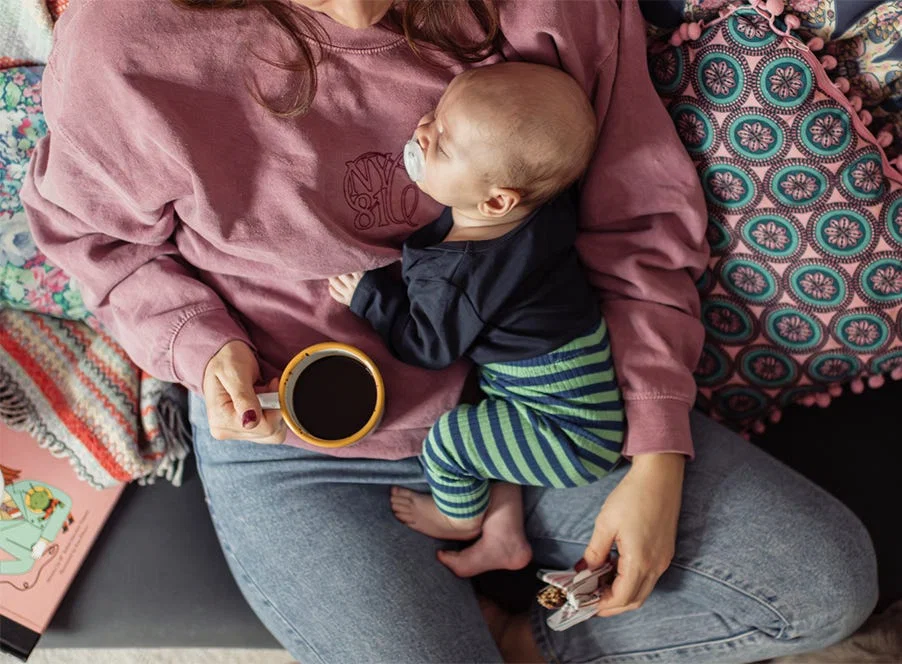
- Baby hiccups are caused by their diaphragm involuntarily spasming or contracting. When this happens, air is sucked into their lungs faster than it is during a normal breath. Once this air reaches their vocal cords, they contract quickly and make the ‘hiccup’ sound that we’re all familiar with.
- To help your baby’s hiccups, take the time to burp them during and after feeds, gently rub your baby’s back, switch up your feeding position and pace, always stay calm or offer them a soother if all else fails.
Newborn hiccups are very common, and they’re usually harmless and will often disappear naturally after a few minutes. You may first feel baby hiccups in the womb causing a ‘jerk’ feeling during pregnancy and this hiccupping continues once they’re born.
If you’re worried that hiccupping is becoming uncomfortable for your baby or is interfering with their breathing, there’s some things you can do to help.
Read on to learn more about why babies get hiccups, and how you can help soothe your baby when they experience them.
What are hiccups in newborns and children?
Just like in adults, baby hiccups are a natural reflex. They happen when their diaphragm (the dome-shaped muscle that relaxes and contracts at the bottom of their chest) involuntarily spasms or contracts. When this happens, air is sucked into their lungs faster than it is during a normal breath. Once this air reaches their vocal cords, they contract quickly and make the ‘hiccup’ sound that we’re all familiar with.
Why do newborn hiccups happen?
Newborn hiccups can happen for a variety of reasons, such as swallowing air while feeding, overfeeding, trapped gas in the stomach, colic, or a fast flow of milk. They can also be triggered by a sudden change in temperature, excitement, anxiety, or just as a natural reflex of the diaphragm.
Occasionally, hiccups in babies can be a symptom of infant acid reflux. If this is the case, they’ll usually present alongside other symptoms like arching of the back and crying while feeding, being irritable, spitting up food, and coughing. If you spot these symptoms, contact your GP for advice.
How to help a baby with hiccups
While hiccups can be frustrating for both a baby and their caregiver, they typically resolve on their own after a few minutes and don’t usually require medical attention. But, if you do want to help ease or prevent your baby from getting hiccups, you can give these tips and tricks a try…
Take time to burp baby
Some babies can be difficult to wind, but it’s an important step that shouldn’t be skipped. Burping a baby frequently during and after feeds and avoiding overfeeding them can help to minimise the occurrence of hiccups.
Rub baby’s back
Soft, gentle strokes can help relax a baby and can help to stop or reduce the spasms of hiccupping.
Switch up your feeding position and pace
It can help to keep your baby upright or experiment by adjusting your breastfeeding hold or the position of their bottle when feeding them. You can also try to slow down the pace of your baby’s feeds and have a few more breaks to wind them during each feed.
Adjust the frequency of your feeds
Offering your baby smaller feeds more often can help them swallow less air and reduce the likelihood of hiccups.
Stay calm and relaxed
Try to make sure your baby is chilled during a feed and that the environment around you is calm. It can also help to make sure they have a clean nappy on and feel comfortable before you feed them.
Offer them a soother
Some parents find that giving their little one a soother helps to relax their diaphragm and therefore eases baby hiccups.
How to get rid of baby hiccups
There are a few things you can do to help get rid of your baby’s hiccups, like burping them. This can help release any trapped air bubbles in their stomach.
If the hiccups persist, try gently rocking your baby or giving them a warm bath to help calm them down. Remember, hiccups are common in newborns and are usually nothing to worry about.
While some people believe that frightening someone can cure hiccups, there’s no scientific evidence to support this, and you should never startle your baby to try and stop their hiccups.
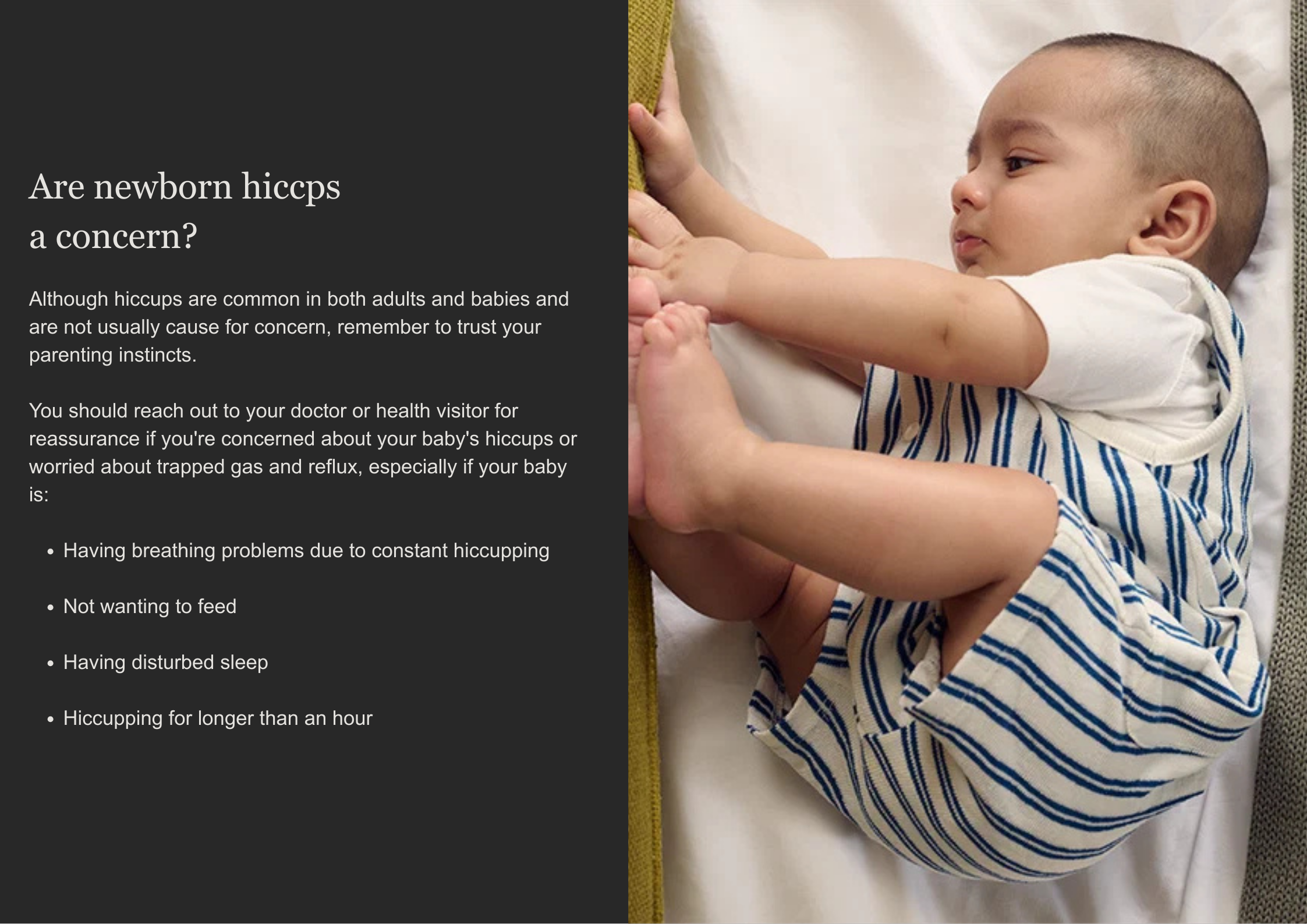
Baby hiccups are completely normal and are never a reason to worry unless you notice anything out of the ordinary, including your baby not wanting to feed or hiccupping for longer than an hour.
What’s the best position for baby hiccups?
The best position for baby hiccups is to hold your baby upright and against your shoulder, allowing you to gently pat or rub their back. This is a good position for releasing any trapped air and helps relax the diaphragm. You can also keep your baby upright or 20-30 minutes post-feed to prevent hiccups.
Baby hiccups and feeding
Why does my newborn hiccup after feeding?
Newborn babies sometimes swallow air while they’re feeding and this can cause their diaphragm to contract, resulting in hiccups. It’s nothing to worry about and usually goes away on its own. Just make sure you burp your baby after feeding to help release any trapped air and avoid feeding them too quickly.
Can you feed a baby with hiccups?
Yes, it’s generally safe to feed a baby with hiccups. Feeding and the use of a soother can actually help relieve hiccups by relaxing the diaphragm. However, if your baby shows any signs of discomfort, it’s best to stop until the hiccups have subsided.
Do hiccups mean my baby is finished feeding?
Hiccups are common in babies and don’t necessarily mean that they’ve finished feeding. It’s normal for babies to experience hiccups during or after feeding, and they usually go away on their own. However, if your baby seems uncomfortable or the hiccups persist for a long time, it may be a good idea to check with your doctor to rule out any underlying issues.
Can anti-colic bottles reduce hiccups?
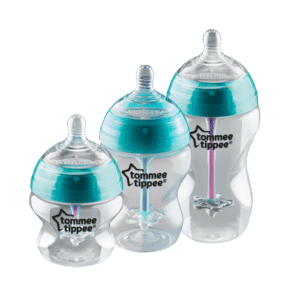
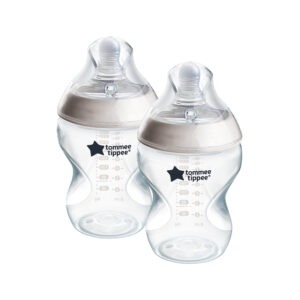
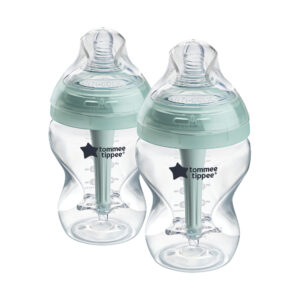
95% of parents say that the Tommee Tippee Advanced Anti-Colic bottle helped to ease the discomfort of colic, gas, and reflux*, but because anti-colic bottles are designed to reduce the amount of air a baby ingests while feeding, there is no evidence to suggest that they can reduce hiccups specifically.
Baby hiccups and sleep
Can a baby sleep with hiccups?
Yes, most of the time babies will sleep right through hiccups, meaning they’re unlikely to disrupt their sleep or cause them discomfort.
How do I get my newborn to sleep with hiccups?
Stress or over-excitement can trigger hiccups, so as well as burping your baby, staying calm, keeping your little one relaxed and comfortable by having some calm playtime together, gently rocking him or her and making sure their nappy is clean before you put them to bed can help soothe their hiccups.
Babies can get hiccups often as their diaphragm is still developing which is the muscle that helps them breathe. Therefore, it can spasm easily, especially after feeds or by swallowing early, but this should subside as they grow.
Babies get hiccups in the womb because their diaphragm is still developing and they’re practising movements to breathe well. These tiny spasms actually strengthen their respiratory muscles and are completely normal in fetal development.
Typically, baby hiccups last anywhere between a few minutes to 10-15 minutes and should only cause concern if they’re often and last a long time.
No, it’s very unlikely that hiccups would bother or hurt a baby, especially as they’re a normal reflux. Most of the time, babies don’t even notice them, but if you find your baby is upset or they hiccup a lot of the time, it’s a good idea to mention it to your GP.